
What Do People See During a Near-Death Experience?
Imagine this: a 25-year-old man dies on the bathroom floor of a Utah restaurant and wakes up watching paramedics zip his own body into a body bag from above. A Canadian airline pilot spends 11 hours clinically dead and comes back describing fields of color so vivid they have no earthly equivalent, three angels with violet eyes, and a figure on a hillside with golden light flowing through Him. A lifelong atheist with failing organs dies twice in 18 months, travels through what she calls a cosmic wormhole, and returns unable to explain what she encountered without using the word God. A young man survives a catastrophic accident and wakes from an 18-day coma describing a face-to-face meeting with Jesus that left him permanently, irreversibly changed.
Vincent Tolman. Jim Woodford. Riley Courtwright. Gabe Poirot. All different ages, different backgrounds, different corners of the world. And yet when you ask each of them what they saw, the picture they paint is strikingly, almost impossibly, the same.
So what did they actually see? Consistency is important here because as humans we grasp for things to logically make sense, and while many NDEs are very different, their similarities can't be denied. Read on to hear what thousands of people from every culture, age, and belief system consistently report, and what each element reveals about the God who has been telling us this story all along.
Leaving the Body
Most near-death experiences begin the same way: a sudden, complete separation from the physical body. Some describe it like popping right out of the body, or leaving through their head. People describe rising above it, often watching their own resuscitation from above, overhearing conversations in the hallway, accurately describing details from rooms they had never been in while unconscious.
These veridical accounts, details later verified by medical staff, are among the hardest things for purely brain-based theories to explain. The brain that generates a hallucination cannot accurately perceive what is happening in the next room. And yet, in documented case after case, it does.
“For we are confident, I say, and willing rather to be absent from the body and to be present with the Lord.” 2 Corinthians 5:8
Paul wrote that as theology. Experiencers come back saying it felt like a fact.
The Dark Void and What Comes Next
Before the light, many experiencers pass through something else entirely: they often describe it as a dark void. Not darkness in the frightening sense, which is important to note. Almost no one describes it as threatening. It is more like a deep, velvety stillness. A silence so complete it feels alive. Many describe it as the most peaceful they have ever felt.
And then the void gives way.

What many people find on the other side of that darkness is not a tunnel or a blazing light. It is a living landscape. Rolling hills. Meadows. Mountains in the distance. Trees and flowers that are alive in colors that have no earthly name, they are so vast. Account after account describes the same detail, the one that stops people mid-sentence when they try to explain it: everything there is ALIVE. Not alive the way grass is alive here, but alive in a way that is felt, as if every blade of grass, every tree, every petal is radiated with the same light and love that runs through the whole place. Jim Woodford described the colors and sounds of the landscape he entered as defying description. Countless others say the same: our language simply does not have the vocabulary for what they saw.
Many experiencers describe this place as feeling like a threshold, a kind of entry hall to something greater. Peaceful. Unhurried. A place where the soul can simply arrive before whatever comes next. How sweet is God to bring you to a place He knew would put you at ease, almost as if He created a “waiting room” just for you, filled with the things you love, while you get your bearings.
“In my Father’s house are many rooms. If it were not so, would I have told you that I go to prepare a place for you?” John 14:2
Jesus spoke these words on the night before His death. Experiencers come back saying they think they may have glimpsed one of those rooms, and that nothing they have ever seen on earth comes close.
The Life Review: Sometimes the Very First Thing

For many experiencers, the life review doesn’t happen at the end of the NDE. It happens at the beginning, sometimes within moments of leaving the body, before the light, before the landscape, before any encounter with a Being or a loved one.
In an instant, they see their entire life. Not as a memory playing in the background, but as something fully felt, every choice, every kindness, every cruelty, relived from both sides at once. They feel what their words did to someone else. They feel the ripple a small act of love sent outward further than they ever knew. Some describe it as the most searingly honest moment of their existence. And yet almost universally, they describe feeling loved throughout it, not judged, not sentenced, but seen. Completely, tenderly, honestly seen.
The timing matters. When the life review comes first, before the beauty, before the reunion, before the light, it carries a specific message: this is not something God springs on you at the end. It is the first thing. As if the very first order of business on the other side is simply this: let’s look at who you were, and love you anyway.
“For now we see only a reflection as in a mirror; but then we will see face to face. Now I know in part; then I will know fully, even as I am fully known.” 1 Corinthians 13:12
Paul wrote that being fully known is inseparable from being fully loved. Experiencers come back saying that is exactly what the life review felt like, the two arriving together, at the same moment, as one thing. We explore the life review in much more depth here: What Is an NDE Life Review?
A Peace That Passes Understanding
The moment people leave their body, the fear goes with it. Pain vanishes. Anxiety lifts. What replaces it is a peace so complete that many experiencers say it is the single hardest thing to describe, not the absence of fear, but the presence of something far larger.
“And the peace of God, which transcends all understanding, will guard your hearts and your minds in Christ Jesus.” Philippians 4:7
Thousands of people return from the edge of death saying that verse finally makes sense to them, not as a promise to believe, but as a place they have been.
The Tunnel and the Light
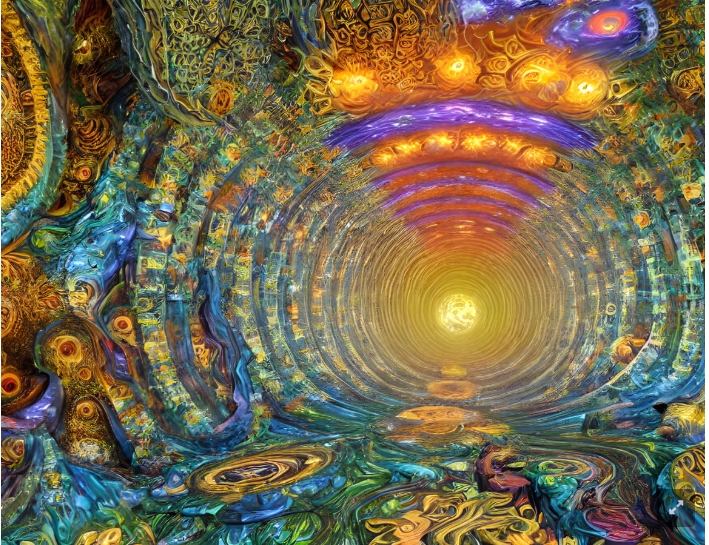
Many describe moving through a darkness toward a light. Some describe it as a tunnel that fills with light, a light unlike anything in the physical world. Not just seen, but felt. Not cold and clinical, but warm, alive, and drawing them forward. Some describe it as the most beautiful thing they have ever encountered. Others simply say they cannot find words for it.
What is consistent is this: the light is not a thing. It is a Person.
“I am the light of the world. Whoever follows me will never walk in darkness, but will have the light of life.” John 8:12
Many experiencers, including those with no prior faith or belief in God, return identifying this light as Jesus. Not because they were told to. Because they recognized Him. Think about what that means. A Muslim. A Hindu. Someone who never once heard His name spoken with reverence, and yet they come back with a knowing that bypasses every barrier, every belief system, every lifetime of being taught otherwise. That is not suggestion. That is encounter.
The Being of Light
This is the encounter that undoes people entirely. The light is a Being, a presence of overwhelming, unconditional love who knows the experiencer completely. Every thought, every secret, every moment of shame, fully seen. And the response is not judgment. It is love. A love more real and more complete than anything they have known in this life.
“Neither do I condemn you.” John 8:11
People who encounter this Being, atheists, agnostics, lifelong believers, come back describing the same thing: a love that was already there, waiting, that had never stopped pursuing them. That is not a neurological pattern. That is a description of God.

Deceased Loved Ones
Many experiencers are met by people who have already died, a parent, a sibling, a friend, luminous, recognizable, and radiant with a joy this world doesn't have words for. And here is the detail that quietly undoes people: most of them appear to be in their 30s. Not as they were when they died. Not frail, or aged, or marked by whatever took them. Young. Whole. More themselves than they ever seemed here. The message these reunions carry has never changed, across every culture and every century: the people we have lost are not gone. They are somewhere. And that somewhere is lit by the same light.
“He is not the God of the dead, but of the living.” Matthew 22:32
A Boundary and a Return
Most experiencers describe reaching a threshold, a border they understand they are not yet permitted to cross. Some are told it is not their time. Others are given a choice, and describe choosing to return for the sake of someone they love. Almost all of them say the same thing: they did not want to come back. What they found on the other side of that boundary made this world feel so dull, gray and heavy in comparison.
And yet they return, carrying something with them. A knowing. A love. A ripple that moves outward into everything they touch from that moment on.
“For to me, to live is Christ and to die is gain.” Philippians 1:21
Paul wrote that from a prison cell. Experiencers come back saying they finally understand what he meant.
What Does It All Mean?
The consistency of what people see during a near-death experience is not easily explained. These are not people who all read the same book or attended the same church. They are children and professors, atheists and mystics, people from cultures that have never heard the name of Jesus, and they keep describing the same light, the same love, the same Person. Whatever someone sees during a near-death experience, it points, again and again, in the same direction.
At The Wave & Ripple, I believe that consistency is pointing somewhere. And the place it keeps pointing is toward the God who sent His Son because He wanted to be found.
“For God so loved the world that he gave his one and only Son, that whoever believes in him shall not perish but have eternal life.” John 3:16
If you want to go deeper into any of these elements, start with our full beginner’s guide: What Is a Near-Death Experience? A Beginner’s Guide.
And if you’d like to understand the life review, the moment experiencers relive their choices from the other person’s side, we explore it in depth here: What Is an NDE Life Review?
Frequently Asked Questions
Do all near-death experiences look the same?
No two NDEs are identical, but the core elements, leaving the body, a tunnel or darkness, a Being of Light, unconditional love, deceased loved ones, a boundary and a return, appear across thousands of accounts with remarkable consistency, regardless of the person’s culture, age, or belief system.
Why do people say the NDE felt more real than ordinary life?
This is one of the most consistent and striking details in all of NDE research. Experiencers almost universally insist that what they encountered was not a dream or hallucination, but hyper-real, more vivid, more coherent, and more emotionally complete than anything in waking life. Many say that coming back to the physical world felt like stepping from color into grey.
Can non-Christians have a near-death experience?
Yes, and many do. NDEs have been documented in atheists, agnostics, Hindus, Muslims, and people with no religious background at all. Many who encounter the Being of Light had never believed in God before their NDE. Some return identifying that presence as Jesus. Others return simply knowing that what they met was love, and that it changed everything.
Are there NDEs that aren’t positive?
Yes, and honesty matters here. A smaller number of experiencers report deeply distressing NDEs, darkness, isolation, or presences that are not benevolent. These accounts are real and deserve to be taken seriously. What’s striking is that even many of those who returned from distressing NDEs came back turned toward God. The darkness, in those cases, became the very thing that drove them toward the light.
Pingback: Is There Scientific Evidence for Near-Death Experiences? - WAVE + RIPPLE