Is There Scientific Evidence for Near-Death Experiences?
I don’t know about you, but I am as logical as they come. I take nothing at face value and let the evidence speak for itself, sometimes to a fault.
So when I stumbled onto a YouTube video of Penny Wittbrodt on an episode of Dead Talks, a podcast episode titled She Met God During Death, I’ll be honest: I was equal parts intrigued and skeptical. It was the first time I had ever heard the term near-death experience. Someone saying they met God? I had questions.
But after listening to Penny’s account, I didn’t have fewer questions. I had more. And I needed answers.
Let’s dive into this together. A cardiac arrest patient, clinically dead, accurately describes a conversation happening in the hallway outside her room, a hallway she never entered, while her brain showed no measurable activity.
A man, flatlined on the operating table, later identifies a nurse he had never met and describes in detail where she placed his dentures while he was unconscious.
A woman dying of advanced lymphoma encounters what she can only describe as the completeness of her life, and returns with her cancer in complete remission, puzzling her medical team.
These are not simply internet anecdotes. They are documented cases in peer-reviewed research, studied by physicians and neuroscientists at some of the world’s most respected institutions. And they represent one of the most genuinely uncomfortable questions in modern science: if near-death experiences are simply the brain misfiring as it dies, why do they keep producing results that a misfiring brain cannot explain?
Here is an honest look at what the science actually shows, and where it runs out of road.
What Decades of Research Have Found
This is not controversial science. Near-death experience research has been taken seriously by credentialed researchers at major universities for over fifty years. And the deeper you go into it, and trust me, I have gone deep, the harder it becomes to dismiss.
Dr. Bruce Greyson spent four decades at the University of Virginia studying more than a thousand NDE cases. What he found was consistent across every culture, age, and belief system: people who have NDEs come back profoundly and permanently changed. Not because of their personality. Not because of their religious background. Not because of what they expected. Something happened to them. His book After is where I would send anyone who wants the science without the spin.
Cardiologist Pim van Lommel published a study of 344 cardiac patients in The Lancet in 2001. Eighteen percent of successfully resuscitated patients reported an NDE. And the depth of the experience had zero correlation with oxygen levels, duration of cardiac arrest, or medication. Zero. Every physiological explanation on the table predicted those things would matter. They didn’t. Van Lommel himself was stunned.
A 2019 multinational study across 35 countries and over 1,000 adults found that 10% met the clinical threshold for an NDE on the Greyson Scale. Same number. Different countries. Different cultures. Different belief systems. Consistent every single time. At some point consistency stops being a coincidence.
The Greyson NDE Scale
The Greyson NDE Scale is a 16-question standardized assessment developed by Dr. Bruce Greyson in the late 1970s, published in 1983, and now the most widely used scientific instrument for measuring and classifying near-death experiences. Think of it as the tool that moved NDEs from anecdote into data.
The 16 questions are grouped into four categories:
Cognitive — altered time perception, life review, sudden understanding.
Affective — feelings of peace, joy, cosmic unity, encounter with a brilliant light.
Paranormal — heightened senses, out-of-body experience, visions of the future.
Transcendental — entering an unearthly realm, encountering a mystical being, reaching a border or boundary.
Each question is scored 0 to 2, giving a maximum score of 32. A score of 7 or above qualifies as a clinically significant NDE. It’s what researchers use when they say “10% of the population meets the threshold for an NDE” — they mean 10% scored a 7 or higher on this scale.
The 2024 Brain Activity Findings
In 2024 researchers at the University of Michigan found something genuinely interesting. Four patients on life support, EEG monitors running, life support removed. In two of them, right after the heart stopped, a significant surge of brain activity in the gamma range, the frequency associated with conscious processing, lit up in the area of the brain linked to conscious experience. First time it had ever been documented in humans.
The headlines called it proof that NDEs are just the dying brain misfiring.
A spike in brain activity explains a spike in brain activity. It does not explain how a man in a coma comes back and tells a nurse exactly where she put his dentures. Those are two very different things. And confusing one for the other is not science. It is a headline.
“For now we see only a reflection as in a mirror; but then we will see face to face.” 1 Corinthians 13:12
Science is honest about what it can measure. What it cannot yet measure is what sits on the other side of that mirror.
The AWARE Study: Consciousness After Cardiac Arrest
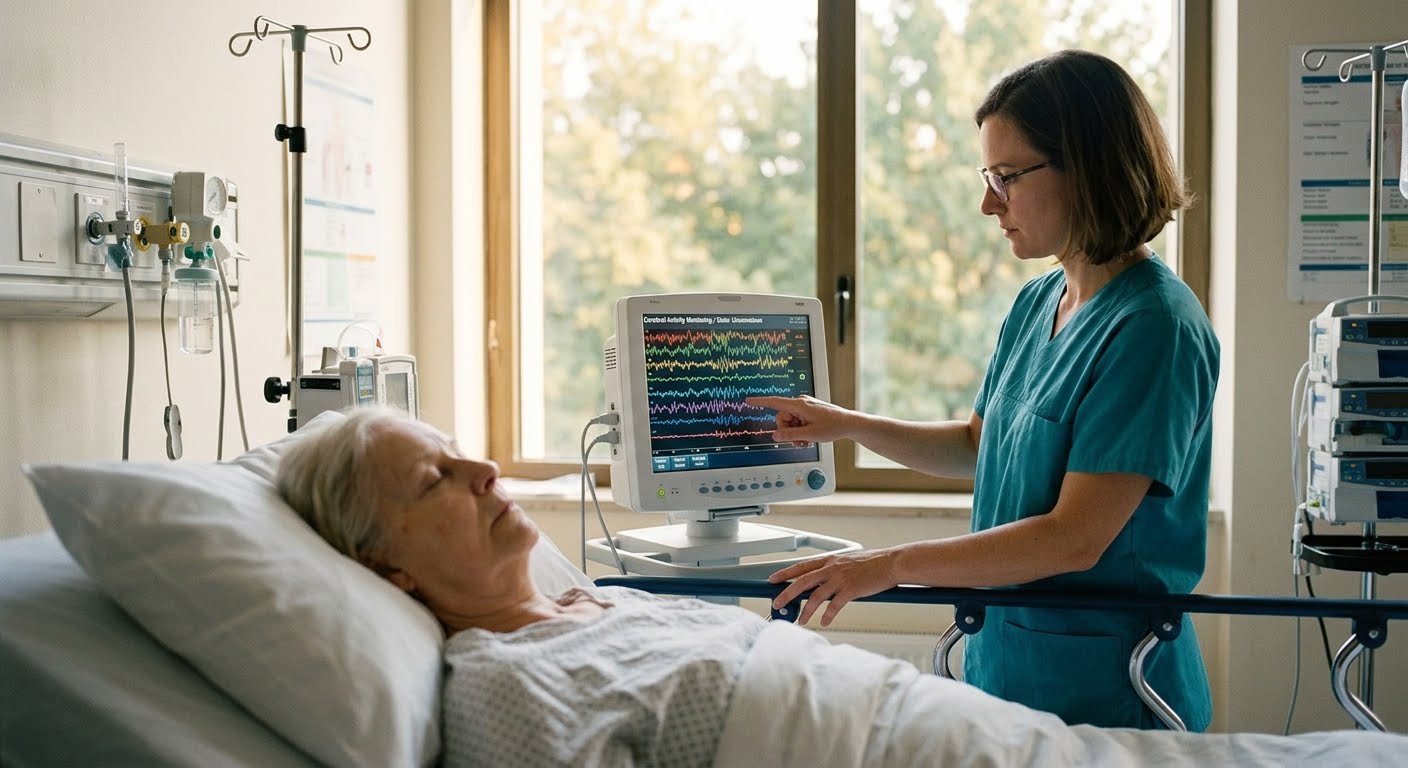
Dr. Sam Parnia, Director of Resuscitation Research at NYU Langone Health, has spent decades studying what happens to consciousness at the moment of death. His AWARE study, AWAreness during REsuscitation, was the largest study of NDEs during cardiac arrest ever conducted, involving patients at hospitals across Europe and North America.
Here is where it gets interesting. Parnia’s team placed hidden images on high shelves inside hospital rooms, images that were completely invisible from the patient’s bed, but that someone floating above their body would be able to see. One patient came back and described what was up there. Accurately. Across the broader study, 39% of cardiac arrest survivors reported some form of awareness during the window when their hearts had stopped and their brains showed nothing. His 2024 book Lucid Dying picks up where the study left off, and his conclusion after decades of this work is that death is not a fixed moment, and that what lies just beyond it is something science is only beginning to take seriously.
The Case That Science Struggles Most to Explain: Veridical NDEs
Here is the category of evidence that keeps serious researchers up at night. Veridical NDEs. Cases where unconscious patients come back with accurate, verifiable details about things happening around their bodies that they had no possible way of knowing.
Not vague feelings. Specific details. A conversation overheard in the hallway. Equipment moved across the room. An object in a room the patient had never set foot in. One study looked at 92 of these out-of-body perceptions and found them completely accurate in 92 out of 100 cases, confirmed by independent witnesses. In 2023, IANDS compiled over 120 verified cases. By 2025, the field had developed a formal instrument just to evaluate how strong the evidence in each case actually is.
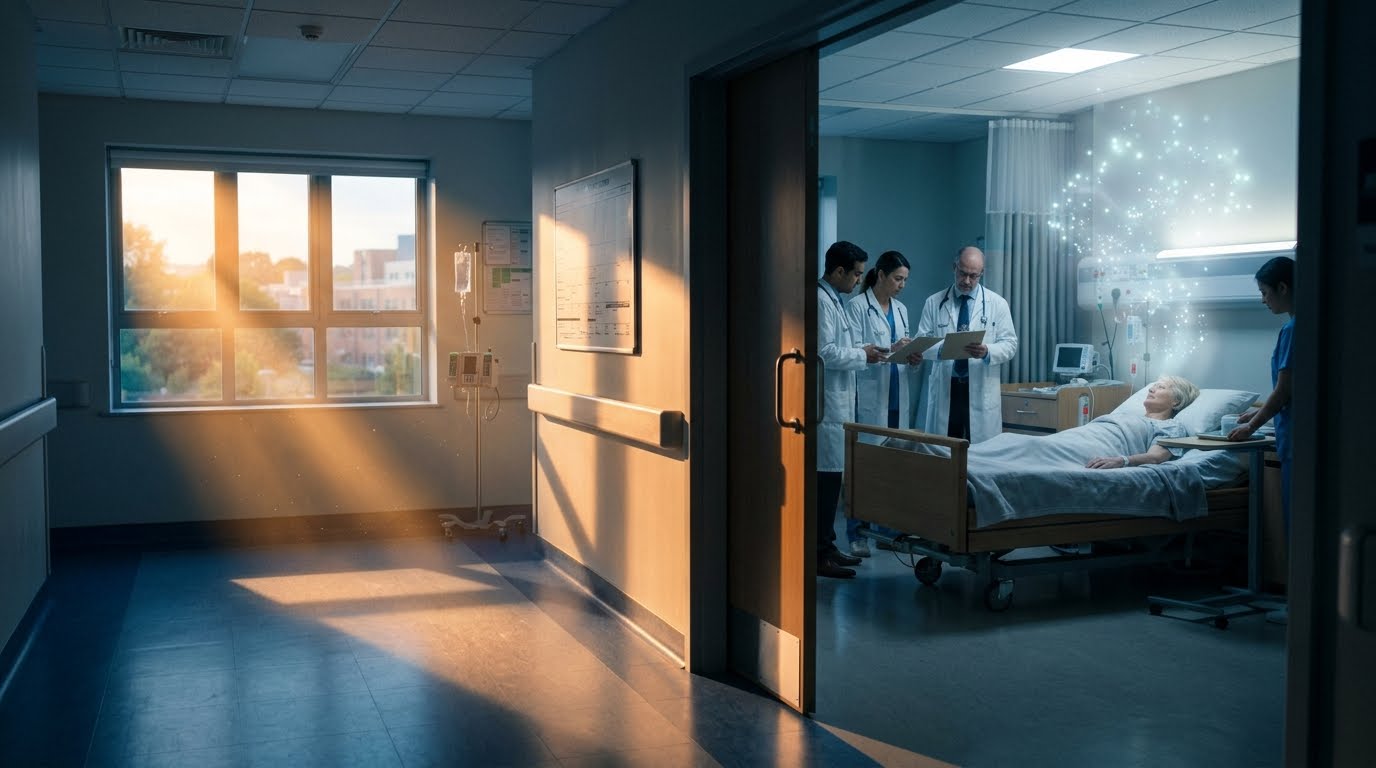
Here is one that is sure to make you pause. A man was brought into a Dutch hospital in cardiac arrest, unconscious, clinically dead, no brain activity. While the medical team worked on him, a nurse removed his dentures and put them on the crash cart next to his body. Standard procedure. Nobody thought twice about it.
A week later, that same nurse walked in to check on him. The man looked up and recognized her immediately. He told her she was the one who had taken his teeth out. He described the room he was in. He described the cart. He told her exactly where on that cart she had placed his dentures.
Every detail checked out.
The crazy part is that this man had been in a deep coma the entire time. No measurable brain function. No way to see, hear, or perceive anything happening around him, according to everything we know about how the brain works. And yet he came back with a precise, accurate, verified account of a moment nobody thought he was there for.
Van Lommel published it in The Lancet in 2001, one of the most respected medical journals in the world. The nurse confirmed the details herself. And no one has ever produced a satisfying neurological explanation for how it happened.
“For the Spirit searches all things, even the deep things of God.” 1 Corinthians 2:10
What the Neurobiological Theories Don’t Explain
Science has proposed several neurobiological explanations for NDEs, and it is worth taking them seriously rather than dismissing them. Faith has nothing to fear from asking honest questions.
Oxygen deprivation. When the brain is deprived of oxygen, it can produce hallucinations. But NDEs are structurally unlike oxygen-deprivation hallucinations, which are typically fragmented and chaotic. NDEs are coherent, sequential, and remembered with unusual clarity for decades.
DMT release. Some researchers have suggested that the pineal gland may release DMT at death, producing NDE-like visions. But there is no direct evidence that this occurs in humans at the moment of death, and studies comparing NDEs to psychedelic experiences find significant differences, particularly in the intensity of the out-of-body component, which is consistently stronger in NDEs.
Temporal-parietal junction disruption. Stimulating this area of the brain can produce out-of-body sensations. But laboratory-induced OBEs produce disorientation and confusion, not the coherent, veridical perceptions that NDE survivors report.
REM intrusion. Some researchers have suggested that REM sleep intrudes on waking consciousness at the moment of death. But this does not account for the consistent cross-cultural content of NDEs, or for the veridical perceptions that cannot be explained by any internal brain state.
None of these explanations, alone or together, accounts for the full picture. They explain some elements of some experiences. They do not explain the consistency, the accuracy, or the lasting transformation that follows.
“The wind blows wherever it pleases. You hear its sound, but you cannot tell where it comes from or where it is going. So it is with everyone born of the Spirit.” John 3:8
Where Science Stops and Something Else Begins
Here is what the science has established: near-death experiences are real events, not invented memories or signs of mental illness. They happen across every culture and belief system. They produce lasting, documented changes in personality and values. And in a significant number of cases, they include accurate perceptions of the physical world that the brain, by all conventional understanding, should not have been able to produce.
Here is what science has not established: what those experiences are, where they come from, or what they mean. 🤔
I call it the God space. That gap between what the data shows and what the data can’t explain. And before you think science failed here, it didn’t. It just hit a wall that no instrument was built to get past. But here’s the thing about that wall. It has a door. And for anyone willing to walk up and knock, that is exactly what Jesus told us to do, it has a way of opening.
Here’s what three years of research taught me about faith. It was never asking me to ignore the evidence. It was asking me to follow it further than I was comfortable going. All the way to the edge. And then trust what was on the other side. The God I kept finding in these accounts, in the science, in the stories, in the scripture, is not threatened by hard questions. He invented the kind of mind that asks them. He invented yours too.
“Ask and it will be given to you; seek and you will find; knock and the door will be opened to you.” Matthew 7:7
The Ripple the Science Cannot Contain

The most compelling evidence for what NDEs reveal is not in any journal or study. It is in the people who come back with the most amazing stories, of belief, of miraculous healing and sometimes even heightened senses and abilities.
Scientists can measure brain waves and verify out-of-body perceptions. What they can’t measure are examples such as these.
I want you to think about the most skeptical person you know. The one who rolls their eyes any time you mention anything remotely spiritual. Now multiply that by ten and you have Howard Storm, an art professor, committed atheist, completely self-centered by his own description, absolutely certain that death was simply the end. Nothing more. No God. No afterlife. Just lights out.
In 1985 he collapsed in a Paris hospital and died. And what came next was so dark and so terrifying that Howard, a man who had never prayed a day in his life, cried out the name of Jesus.
Jesus came.
He was pulled out of the darkness. He was given a life review. He encountered a love he still cannot fully put into words. He came home, walked away from his career, spent years in seminary, and became an ordained Christian pastor who has since completed over thirty overseas mission trips.
That is not a man who had a change of heart. That is a man who was completely rebuilt by an encounter with Jesus Christ.
Anita Moorjani went to the hospital to die. This was not a routine hospital visit. Stage 4 lymphoma. Tumors everywhere. Multiple organs shutting down. Her doctors gave her hours to live. Her family was saying goodbye.
During her NDE Anita experienced the unconditional love of God in a way she says she still cannot fully describe. She understood in that moment that her fears, the ones she had carried her whole life, were at the root of her illness. And surrounded by a love that asked nothing of her, all of that fear dissolved.
She returned to her body. Within weeks her cancer had completely disappeared. Her medical team had no explanation. They documented it, studied it, and came up empty. Science got the receipts but couldn’t explain the transaction.
What it could not measure was what happened to her on the other side.
Let me just say what I think we are all thinking at this point. Hallucinations don’t do this. They don’t take a man who spent his entire life certain there was no God and turn him into an ordained pastor completing mission trips across the world. They don’t dissolve stage 4 cancer and leave a medical team standing there with no explanation. They don’t send people home permanently, irreversibly, undeniably changed in ways that last decades and never fade.
You know what does that?
An encounter with something real. The Divine.
The changed lives. The healed bodies. The people who came back knowing instead of just believing. That is the ripple. That is the evidence no lab can bottle and no theory can fully contain. And if you follow it far enough, and I have, for three years, and am still following it, it always leads back to the same place. To the same light. To the same love. To a God who loves you more than you have ever been told, who has been pursuing you longer than you know, and who, it turns out, will go to extraordinary lengths to make sure you know He is there.
“You will know them by their fruit.” Matthew 7:16
What Is a Near-Death Experience? A Beginner’s Guide — Everything you need to understand what NDEs are and why they matter.
What Do People See During an NDE? — The experiences the science is trying to explain, and what they reveal about God.
Recommended reading: After by Dr. Bruce Greyson • Lucid Dying by Dr. Sam Parnia
Frequently Asked Questions
Is there scientific proof of near-death experiences?
There is substantial scientific evidence that near-death experiences are real events with measurable, lasting effects, not hallucinations or signs of mental illness. What science has not yet been able to establish is what causes them or what they ultimately mean. The most honest answer is that the evidence is significant and the explanation is genuinely open.
What did the University of Michigan NDE study find?
In 2024, researchers led by Dr. Jimo Borjigin found a surge of gamma-frequency brain activity in two of four patients shortly after life support was removed. This was the first direct human evidence of end-of-life brain activity surges previously observed in rats. The finding is significant but does not explain the content, coherence, or veridical accuracy of near-death experience reports.
What is a veridical near-death experience?
A veridical NDE is one in which the experiencer accurately perceives and later describes events happening around their unconscious body, details they had no normal means of knowing. These cases, documented by medical staff and researchers at institutions including the University of Virginia, are among the most difficult for purely brain-based theories to explain.
Do scientists believe in near-death experiences?
A growing number of researchers take NDEs seriously as a genuine phenomenon worthy of scientific study. A 2024 survey of University of Virginia physicians found that very few had dismissive views about NDEs — the main barrier to accepting them was simply lack of knowledge about the research. Prominent researchers at NYU, the University of Virginia, and the University of Michigan have all published peer-reviewed work on the subject.
Can brain chemistry explain near-death experiences?
Brain chemistry can explain some elements of some NDEs, the sense of peace, for example, or certain visual elements. What it has not been able to explain is the cross-cultural consistency of the content, the long-term transformation that follows, or the veridical perceptions that require the experiencer to accurately perceive the physical world while clinically unconscious.